Bangaramakki Sri Kshetra is one of Karnataka’s sacred pilgrimage destinations, located on the right bank of the river Sharavathi near Gerusoppa —once under the direct rule of Queen Chennabhairadevi, fondly remembered as the Pepper Queen. Surrounded by the evergreen forests of the Western Ghats, this land—once barren and neglected—has been transformed into a vibrant spiritual center, attracting thousands of devotees from across the country.
Kshethra Parichaya
Sri VeeranjaneyaKshethra, Bangaramakki, which draws hundreds of devotees seeking solace at the feet of Sri Ramabhaktha Hanuman throughout the year, is located at Gerusoppa, the historical capital of Rani Chennabhairadevi, the Pepper Queen. It is situated on the bank of the holy River Sharavathi, which flows gracefully after plunging from a height of 830 feet, forming the world-famous Jog Falls in the heart of Malenadu and in the vast stretches of evergreen forests of the Sahyadri mountain range in Karnataka, South India.
It is situated at a distance of 45 kilometers from Talaguppa and 32 kilometers before reaching Honnavar on National Highway no.206, popularly known as B.H. Road or Bangalore Honnavar Road. The nearest Airports are at Goa and Mangalore.
The Presiding Deity
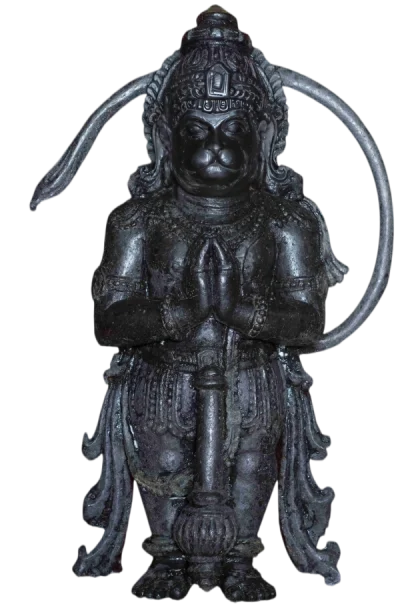
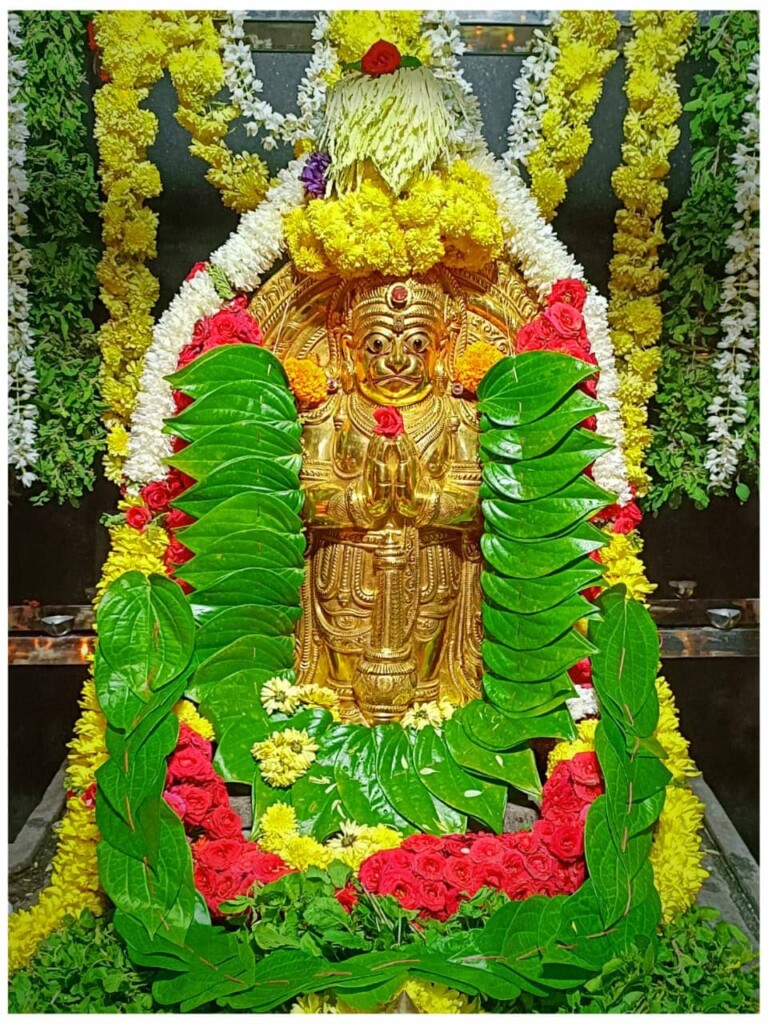
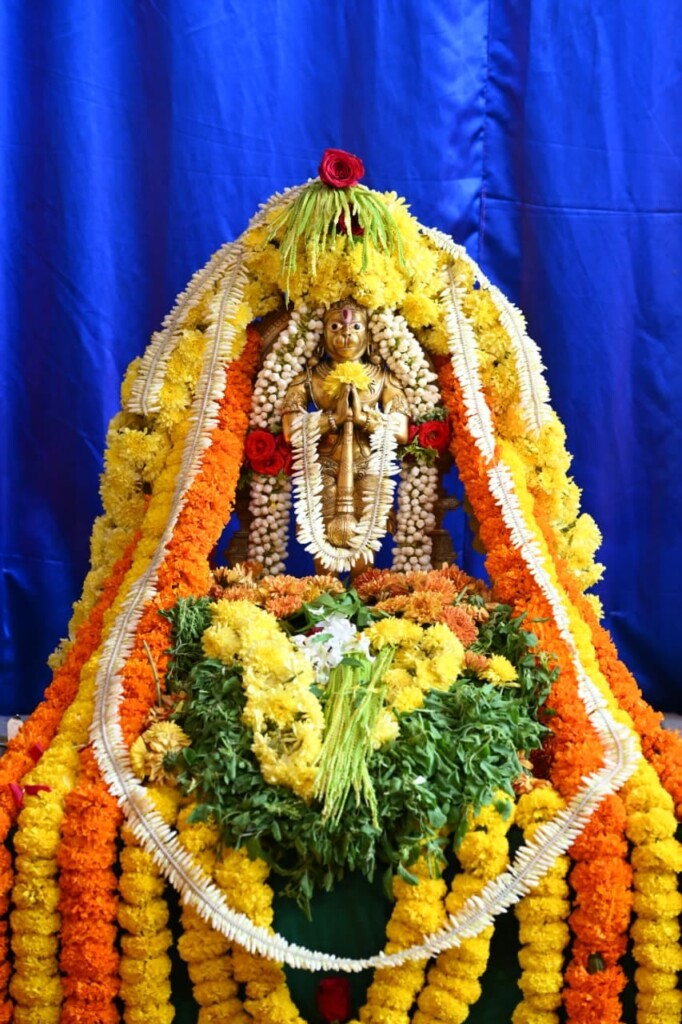
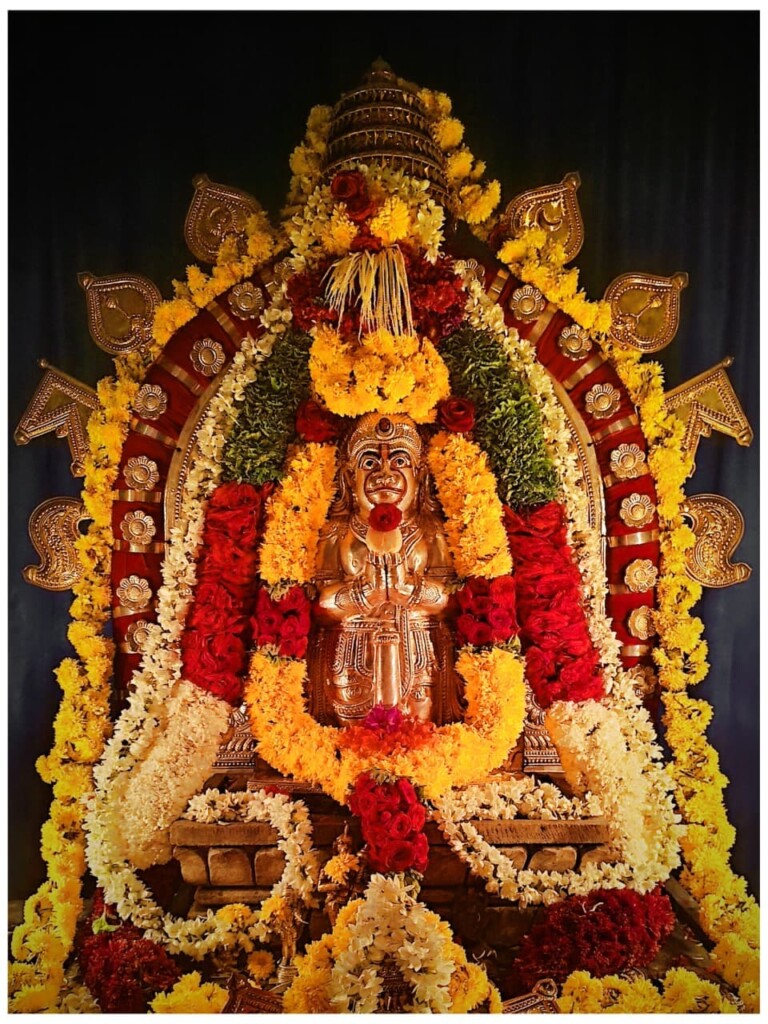
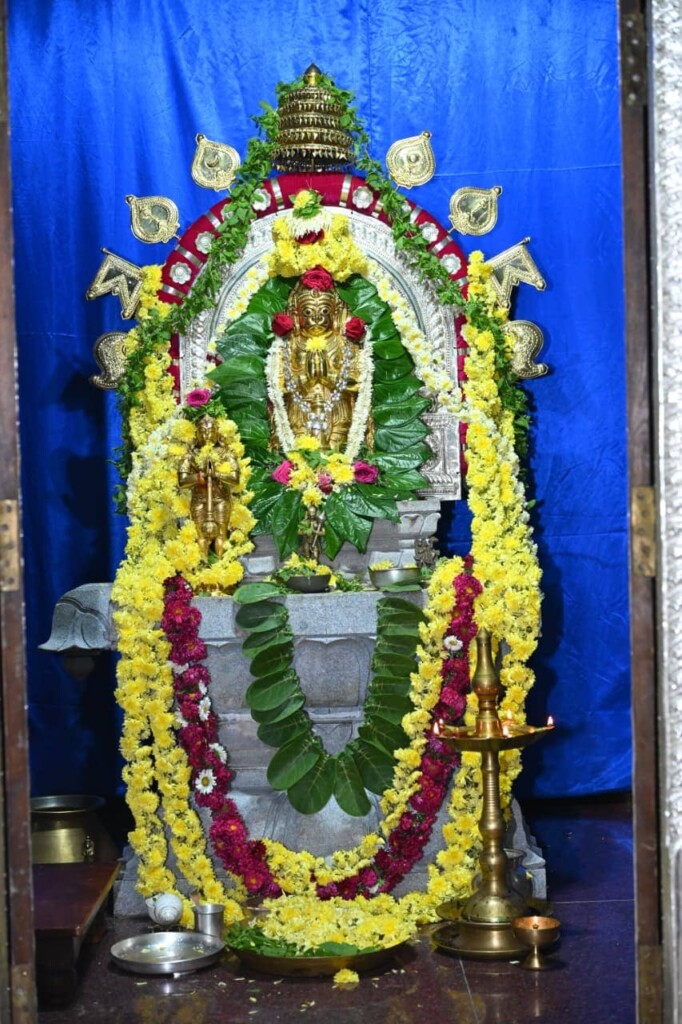
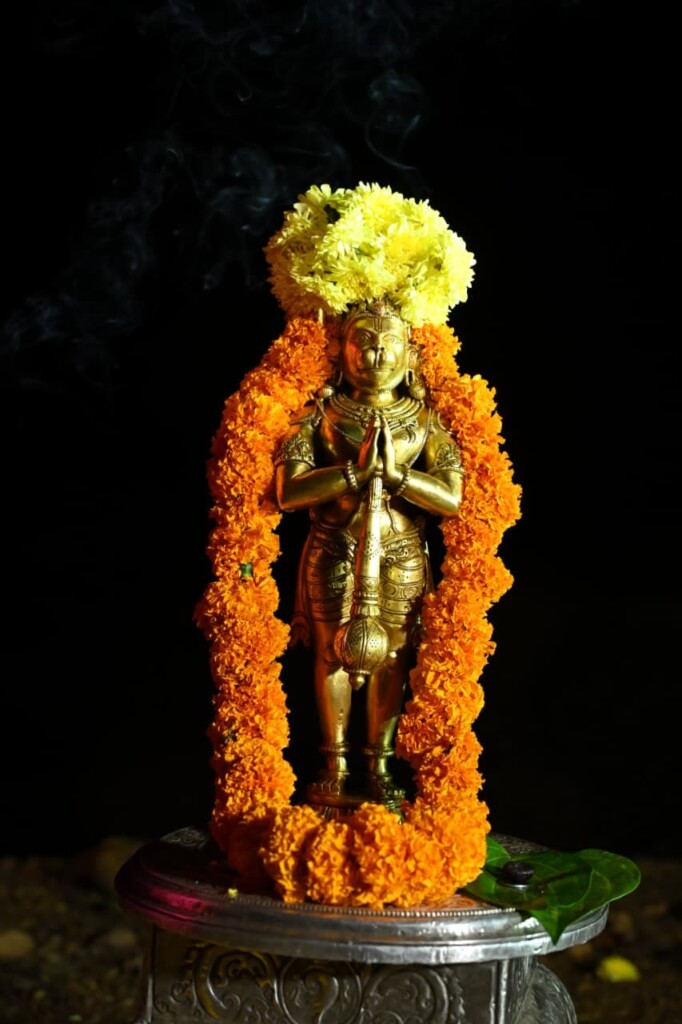
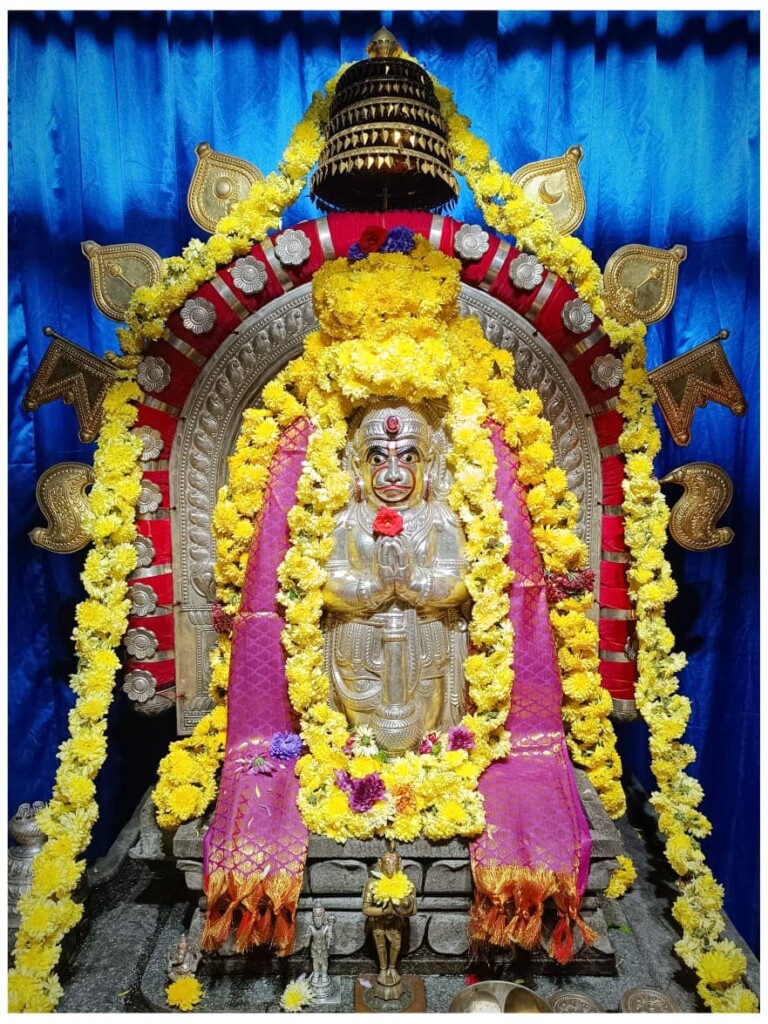
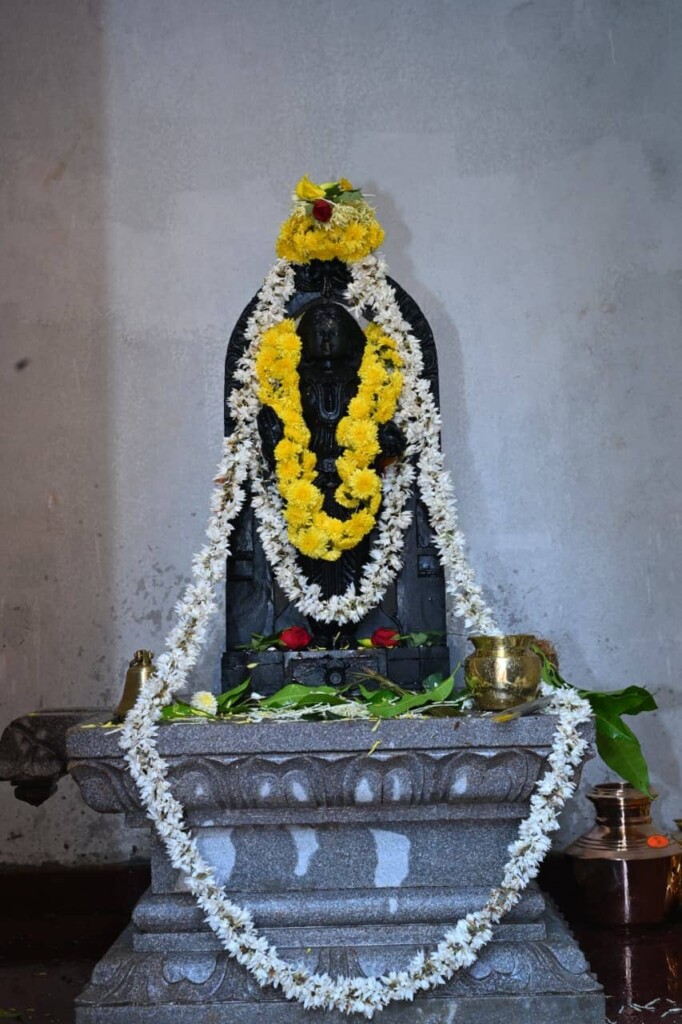
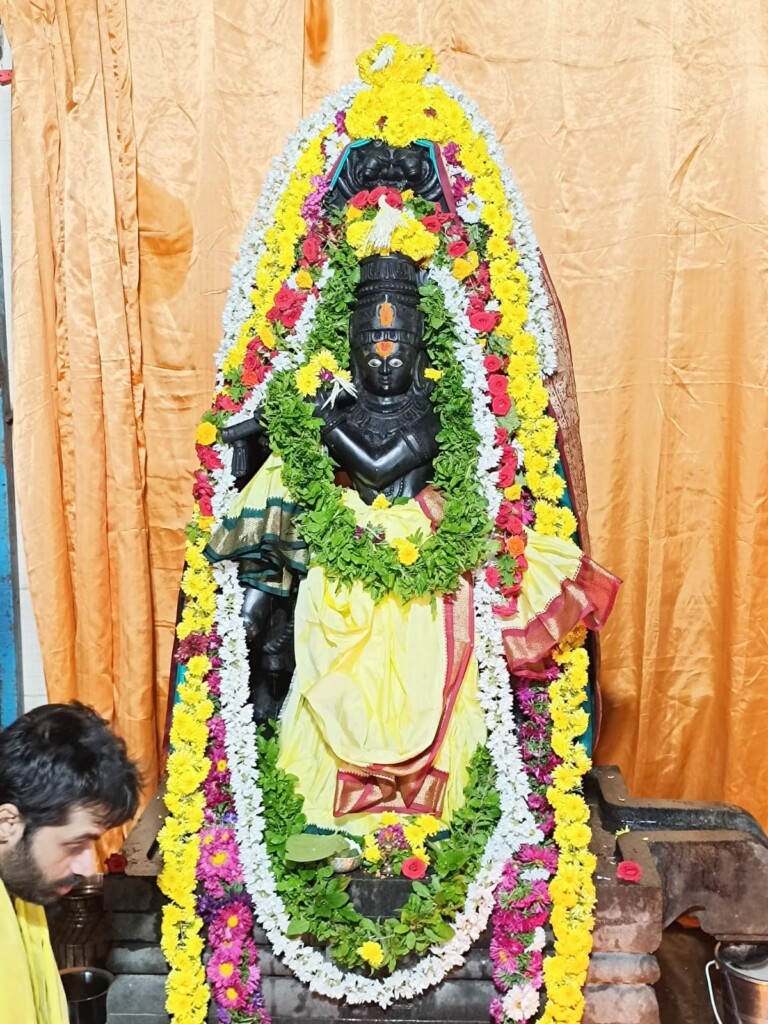
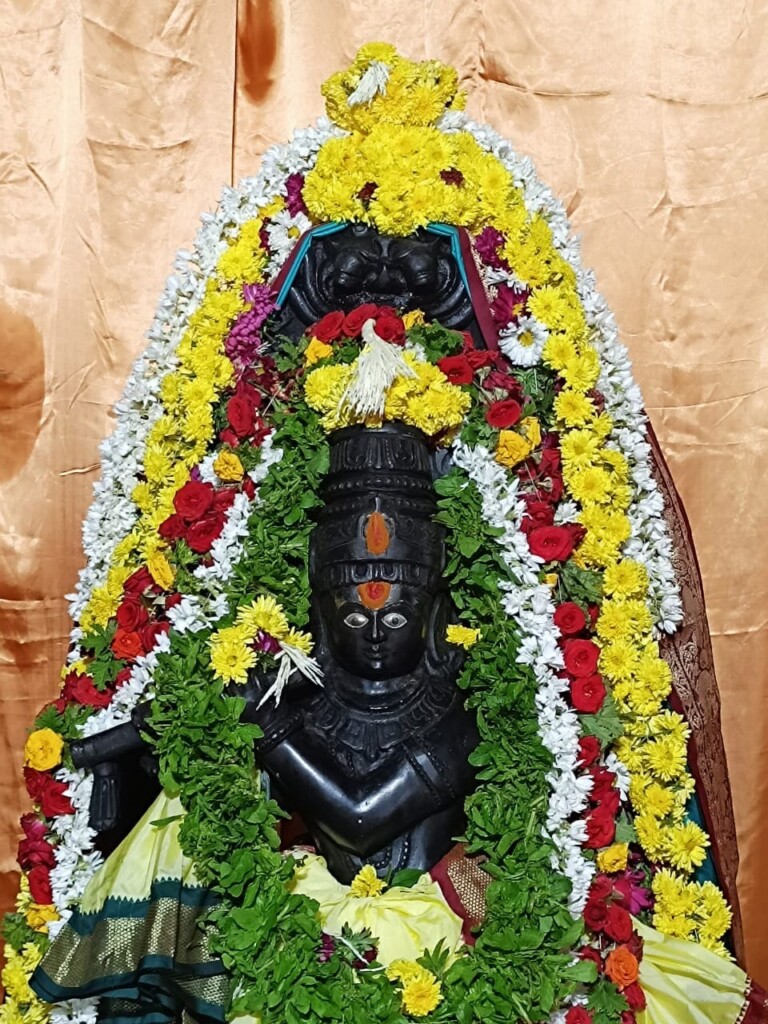
As the name of the Kshethraitself suggests, the presiding deity of the Kshethra is Sri Veeranjaneya. Sri Veeranjaneya of Bangaramakki, in a standing pose with hands joined inNamaskara Mudra, with the Gadaplaced before his legs and held upside down, its tip touching the ground near his feet, symbolizes at once the spirit of total surrender at the feet of his LordSri Rama and his valour in the defence of Dharma(righteousness), ensuring peace and prosperity to devotees seeking solace at his feet.
Lord Sri Veeranjaneya is facing North. It indicates the context of his return from Lanka after his successful mission of locating Seetha at Ashoka Vana. Anjaneya is seen here with a sense of fulfilment of his vow to search Seetha and being elated by the sight of joy in the face of his Lord Sri Rama on receiving the Chudamani, the hairpin of Seetha from him. He is truly Veeranjaneya, for he had achieved what was otherwise impossible for others. Jumping across the sea, tracing Seetha and escaping from the clutches of Ravana and his mighty warriors by giving a heavy blow to their pride are verily his heroic deeds.
The uncommon pose of Anjaneya’s tail in the left to right direction, symbolises his description as “Asaadhya Saadhaka” meaning the achiever of the impossible. This pose is also said to symbolize “Kshipra Siddhi and Kaarya Siddhi” meaning the bestower of immediate success in all endeavours.
Lord Sri Veeranjaneya was installed by late Vedamoorthi, Brahmashree Ganesh Bhat born in a family of the hereditary priests of Anjaneya, with a known history of more than 400 years, on the spot sanctified by meditation, by His Holiness Sri Avadhootha Bhagavan Sri Shreedhara Swami of Varadahalli on many occasions, in fulfilment of his wishes expressed by him on one such occasion. Later his Holiness Jagadguru Sri Bharathi Theertha Swamiji of Sringeri Matha, declared that the place be called ‘Hemapura’ meaning the golden city. Since then thousands of saints and lakhs of devotees flock here from the length and breadth of the country and the world seeking solace and return with a sense of contentment and fulfilment of their righteous desires, feeling happy being relieved from the burden of stress and strain of their everyday life of the worldly pursuits, as evidenced by the rapid rise in the ascending scale of the number of devotees visiting the Kshethra.
The Idol of Anjaneya:
When Vedamoorthi Brahmashree Sri Ganesh Bhat had the inner call from Lord Hanuman to build a shrine for him, the idol of Anjaneya was found ready waiting for installation at a place near Mirjan in Kumta Taluk after a Jalaadhivasa of 15 years. Earlier, during the Jalaadhivasa period many people who wanted to have the idol for installation did not get divine consent sought according to the traditional system of “Deva prashne” as if the idol was kept reserved for installation at Bangaramakki by a divine plan.
Darshana:
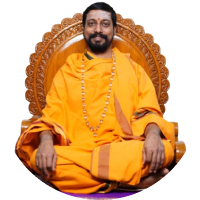
A unique feature of the Kshethra is the 400 years old tradition of ‘Darshana’ during which the presiding deity of the temple, Anjaneya is believed to listen to the woes and submissions of the devotees and speak to them through the mouth of the hereditarily ordained priest. At present, Sri Maruthi Guruji, the Dharmadhikari or the high priest of the temple, ordained by his father Vedamoorthi Brahmashree Sri Ganesh Bhat is continuing the tradition of Darshana i.e. the spiritual counseling, for the devotees seeking solution for their problems of varying nature like crises in spiritual pursuits, domestic and family conflicts, physical, physiological and psychological ailments, education, career prospects, business etc. The message carried by the words of mouth of the beneficiaries of ‘Darshana’ has reached far and wide, even beyond the borders of the country that the number of persons seeking “Darshanaa” is always on rise .’Darshana’ takes place between 7am to 12pm, on Friday, Saturday, Sunday and Monday only, excluding Ekadashi, Poornima and Amavasya falling on these days.
Other Shrines and Sacred Spots in the Kshethra
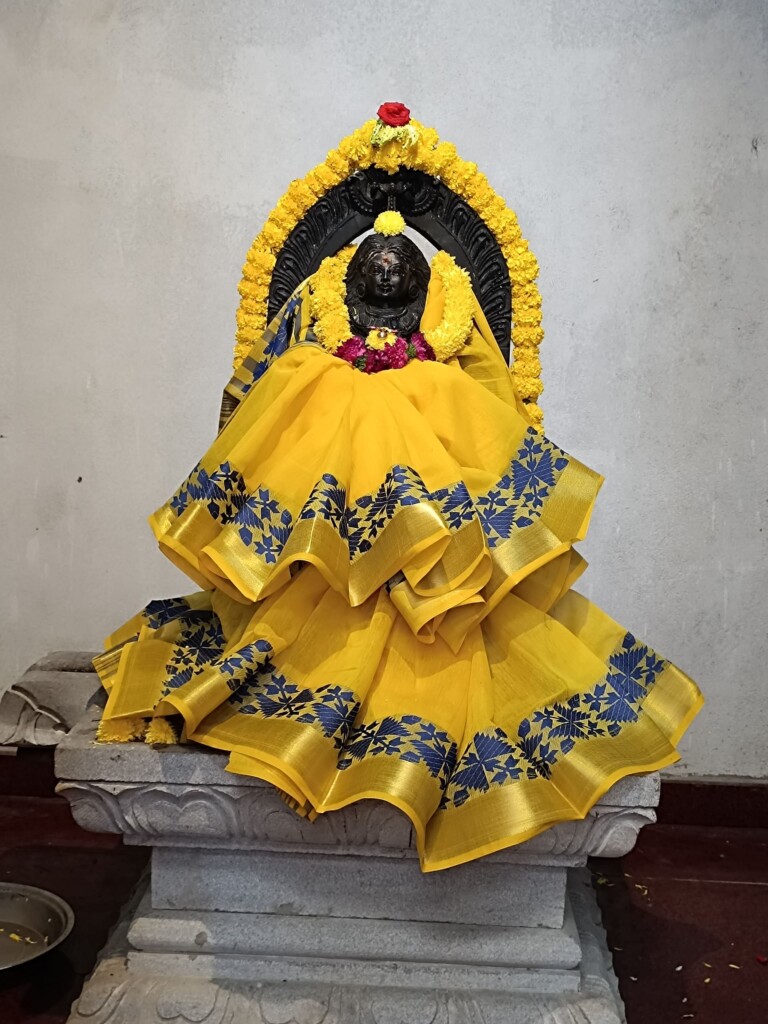
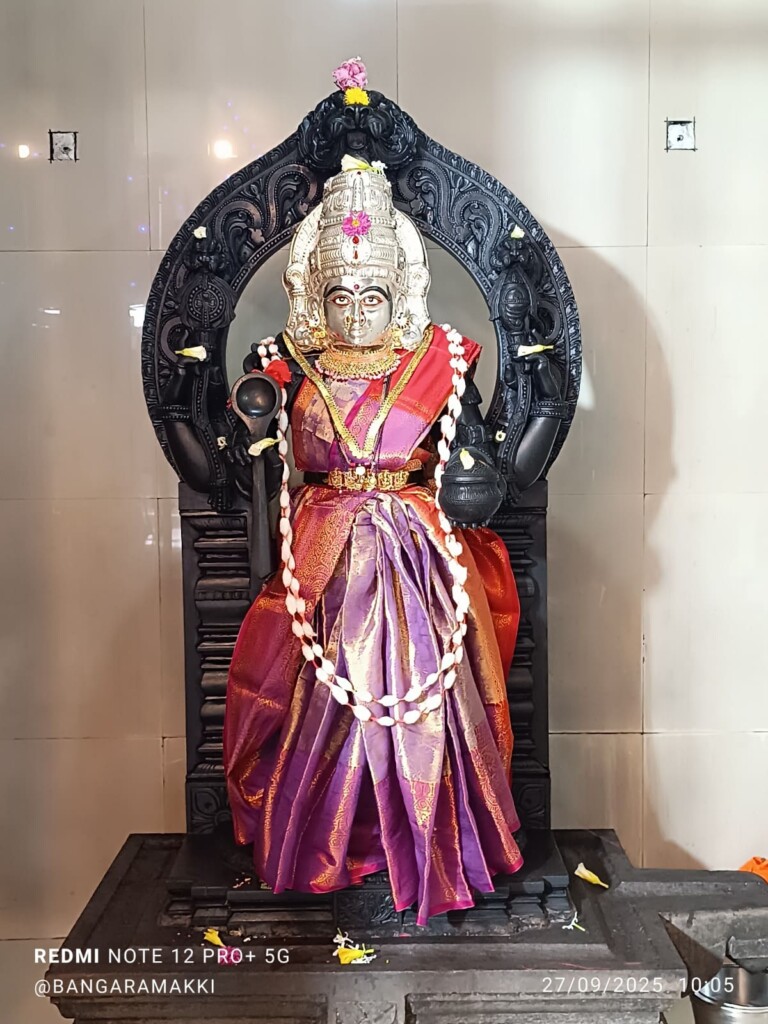
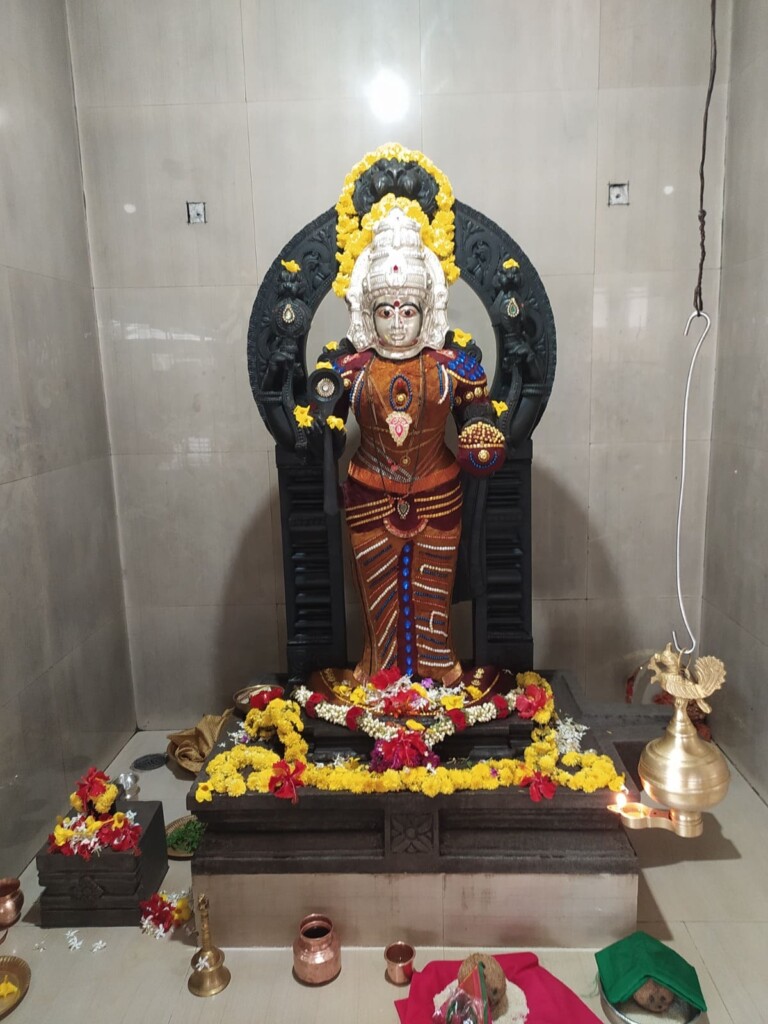
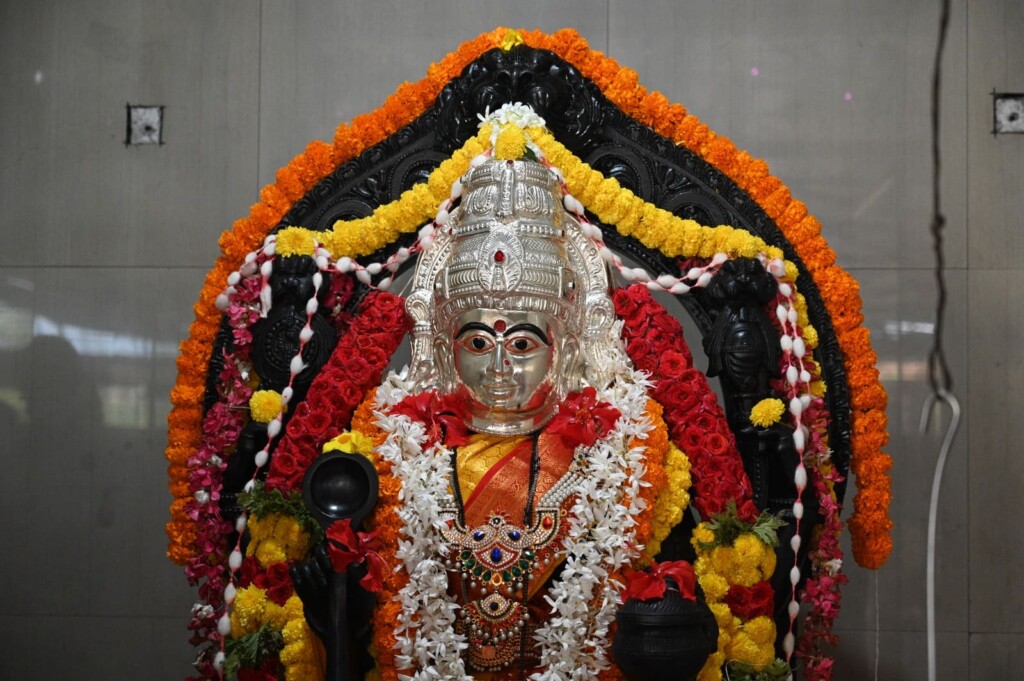
Sri Chowdeshwari Ammanavaru:
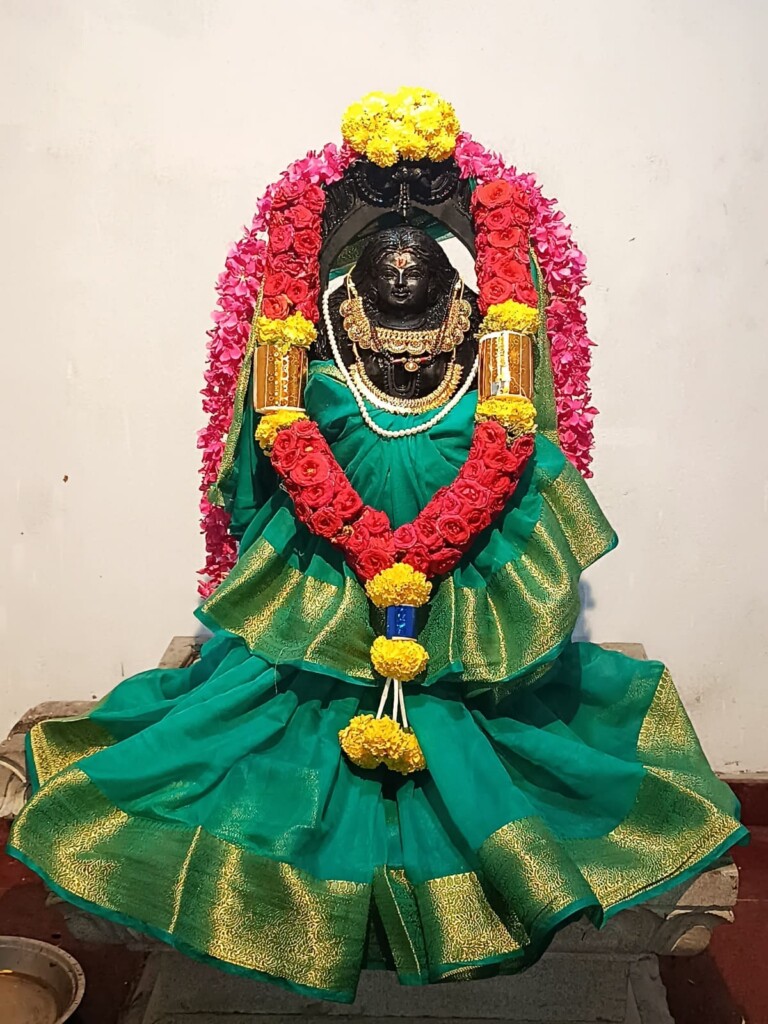
Sri Chowdeshwari Ammanavaru is a popular Goddess in Karnataka, especially the Malenadu region. Sri Chowdeshwari Ammanavaru is also the family deity of many villages and the village deity in a few villages. A shrine for Sri Chowdeshwari Ammanavaru was built along with the construction of the Sri Veeranjaneya Temple within the Praakaara of the temple on the south-west corner. Besides the regular pooja held twice a day, at 6.00 a.m. and 7.00 p.m. Devotees can offer the following services, throughout the day.
Mangalaarati
Devi Parayana
Serva Seve
Bagina Seve
Kunkumaarchane
Vastralankaara
Madilakki Seve
Yaagashaalaa:
A Yaagashaalaa is attached to the temple where the Vedic scholars regularly conducts Yaagas according to Vedic prescriptions sanctifying the entire atmosphere with Vedic recitation and the sacred smoke of the Yajna.
There is also a facility for the performance of Yajnas of the devotees’ choice. A list of Yajnas for which the temple has a panel of qualified and competent priests is given below.
Naga Bana:
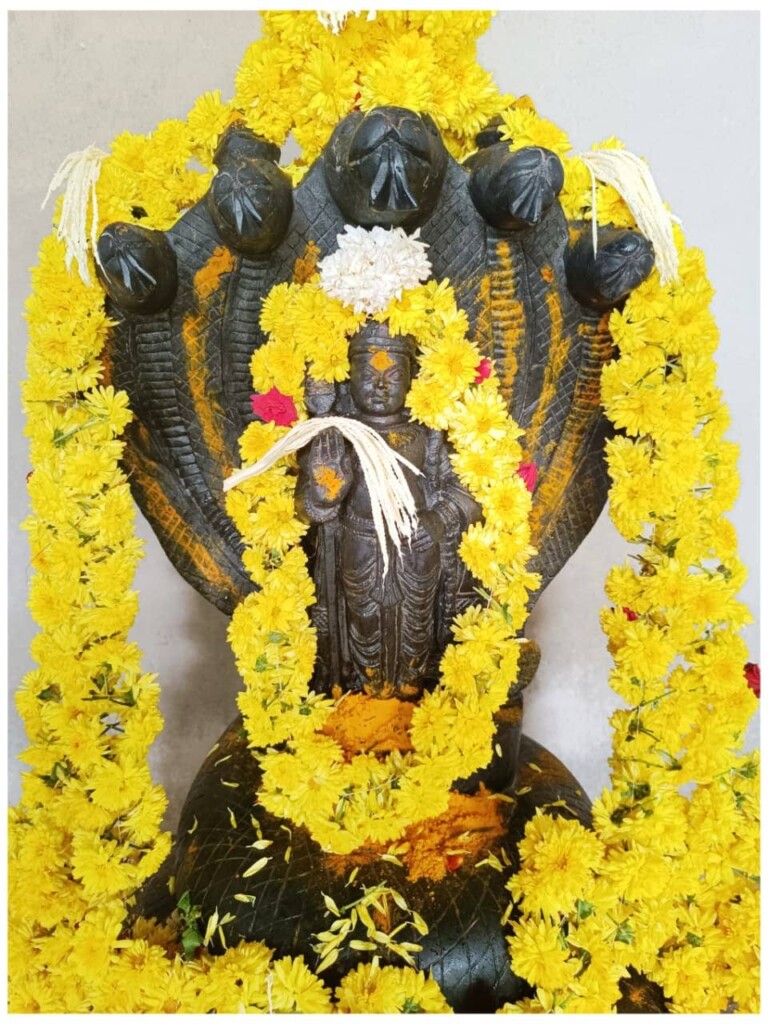
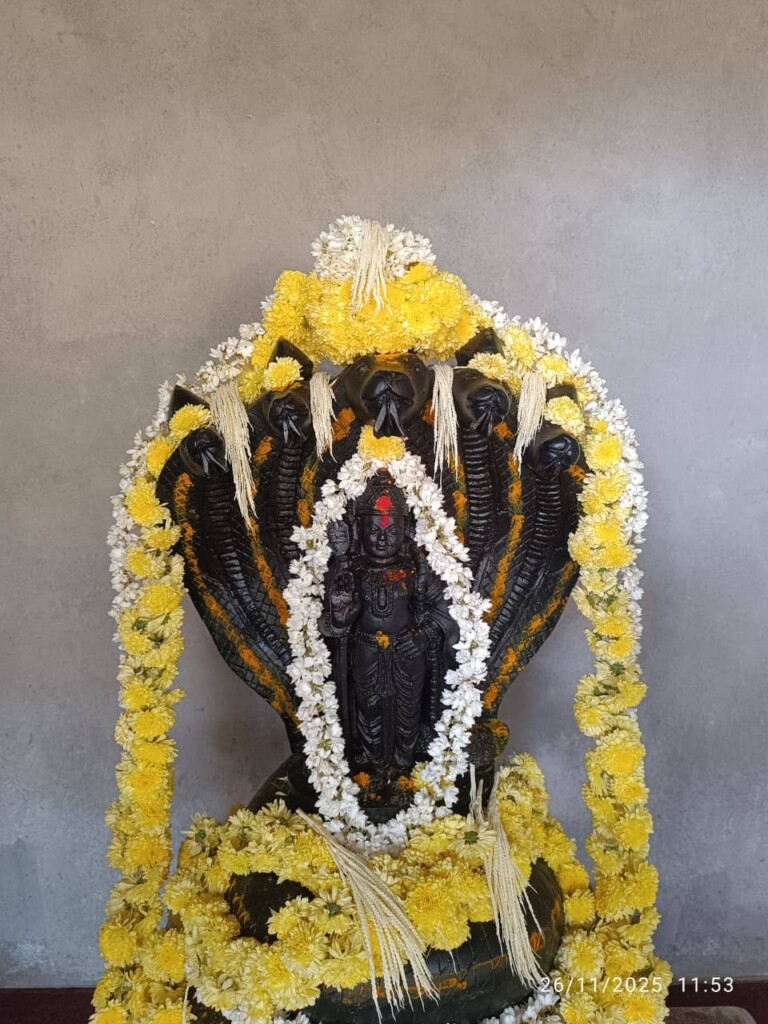
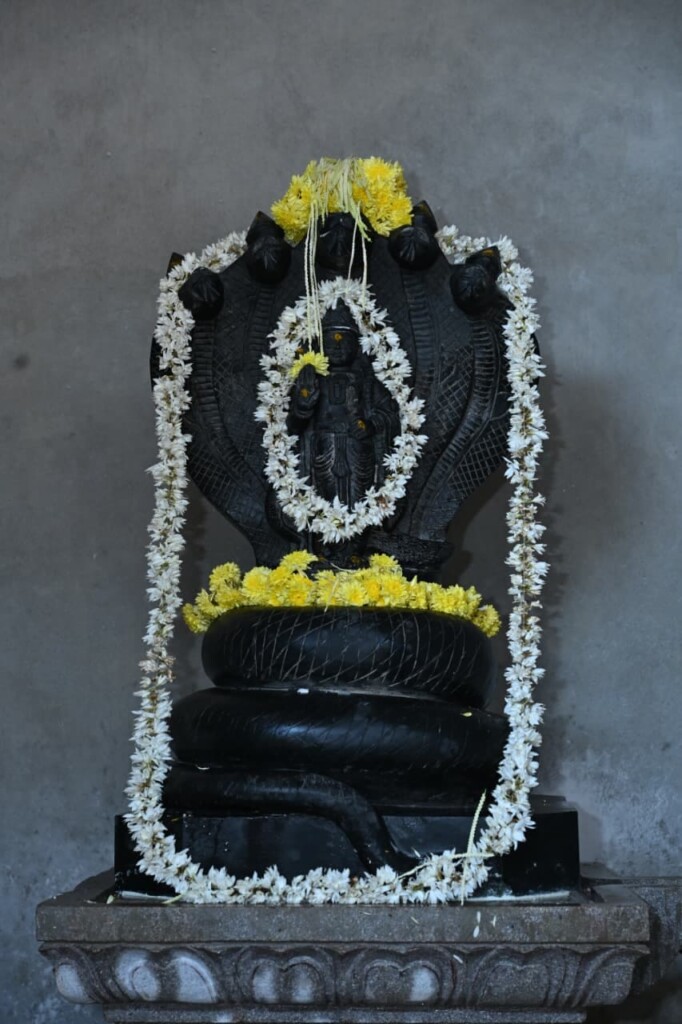
Along with the installation of the Sri Veeranjaneya in the main shrine a new Naga Shila was installed replacing an ancient broken Naga Shila, at a distance of 100 metres to the North East of the temple on Phalguna Bahula Panchami in 1999. Since then pooja has being performed regularly at 7:00 a.m. There are also a few more Naga Shilas installed there by the devotees in fulfilment of their vows and wishes. People believe that the Naga worship ensures fertility or getting a child. People take refuge in Naga Worship for relief from Naga Dosha & Skin diseases. The day of reconsecration is celebrated every year on Shravana Shuddha Panchami with special Pooja.
The special services offered by the devotees here besides Naga Prathishte are Ashlesha bali ,Sarpa samskaara, and Kala Sarpa Shanthi.
Annapoorna Temple and Annapoorna Chathra:
When the number of devotees increased, the venue of Annadaana, which the founder priest Ve.Mu.Bra. Sri Ganesh Bhat had begun, true to his aarshaparampara, at his humble home from the day of the installation of Anjaneya, had to be shifted. The AnnaChathralarge enough to serve food to two thousand devotees at atime was built and named ‘Annapoorna’. Later a shrine of Goddess Annapoorna was built inside the chathra. Pooja is offered thrice daily on a regular basis.
Samsthaapaka Smaaraka:
It is a rock carved bust of the founder, Brahma Leena Sri Ganesh Bhat mounted on a raised altar in the centre of a Mantapa situated to the North East of the maintemple at a short distancefrom the Naga Gudi.
Many devoteesespeciallythose who were associated with him during his lifetime never miss to visit here and payreverential homage to the noble soul.
Bramha Ratha
A Brahma ratha was built by expert Vishwakarma according to the prescriptions of the Shaasthras. The first Brahma Rathothsava was held in the year 2006. Since then Brahma Rathothsavahas been held regularly during the annual festival every year.
Amruthadhaaraa Goshaala:
AmruthadhaaraGoshaala was founded by Sri Maruthi Guruji for housing and caring for cows, with a spirit of reverence and service, given the status of the cow as mother and an abode of the thirty–three crore devatha in the Indian Culture.
Vision into Action
Every initiative of the Kshetra reflects a commitment to discipline, continuity, and service to humanity—bringing Sri Maruthi Guruji’s vision into reality.
The Presiding Deity (Veeranjaneya)
As the name of the Kshetra itself suggests, Sri Veeranjaneya is the presiding deity of Bangaramakki. Depicted in a standing pose, hands joined in Namaskara Mudra, and holding the Gadha upside down with its tip touching the ground, the idol reflects both:
Total surrender at the feet of Lord Sri Rama
Valour in defending Dharma, ensuring peace and prosperity for devotees
Facing north, this form of Anjaneya signifies his triumphant return from Lanka after successfully locating Sita in Ashoka Vana. The joy on his face mirrors the delight of Lord Rama upon receiving Sita’s Chudamani (hair ornament) from him.
Sri Veeranjaneya of Bangaramakki embodies the spirit of courage, devotion, and service—leaping across the sea, overcoming Ravana’s might, and accomplishing the impossible for the sake of righteousness.